
Piano Tab is a simple, color-coded way to write piano music with letters and numbers instead of traditional notes. It was created and patented by piano instructor Sean Campbell, and it lets beginners play real songs without learning to read sheet music first. Here’s how to read piano tabs, step by step.
1. Find the right hand and left hand rows
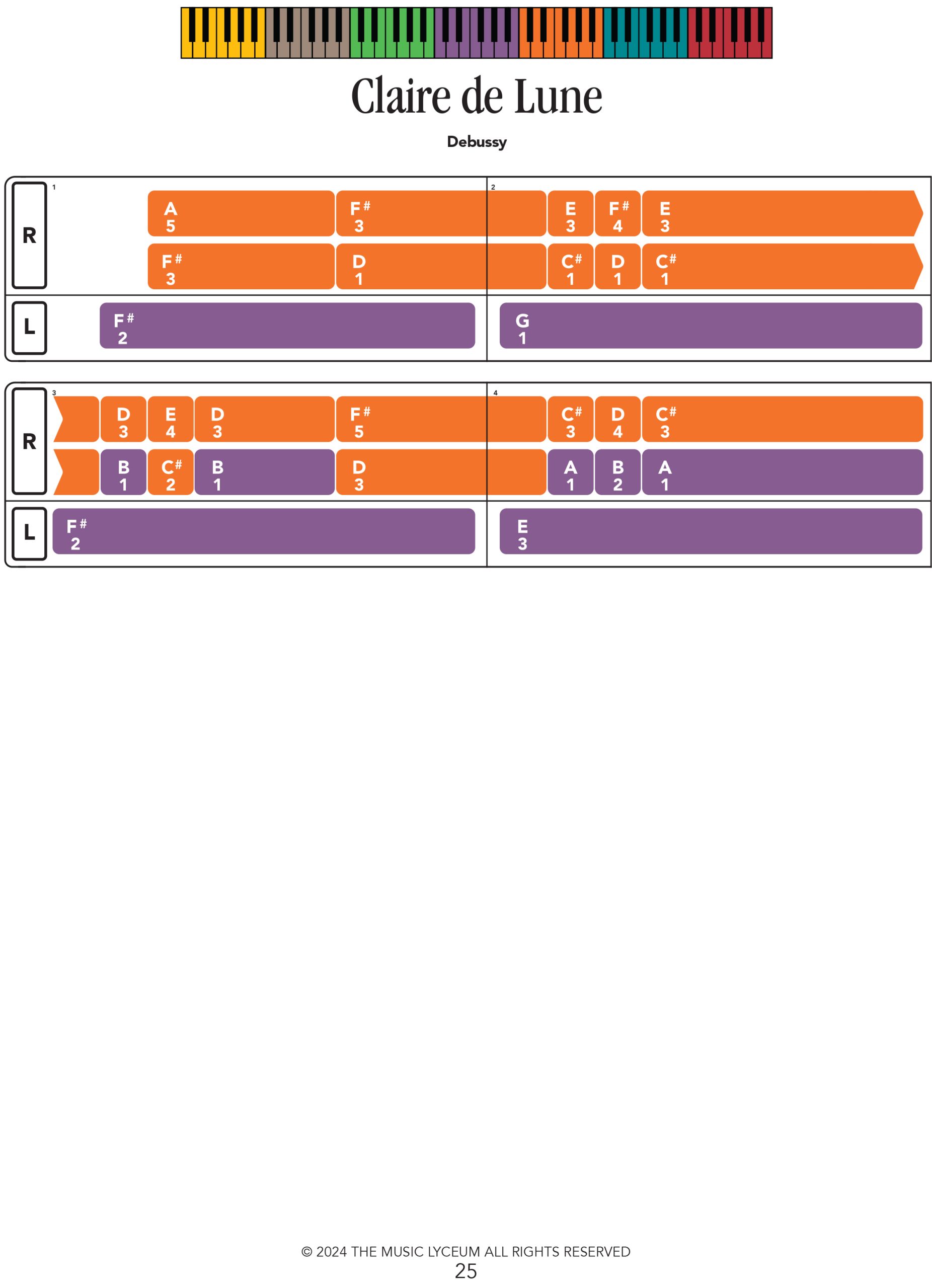
Every line of Piano Tab is split into two rows. The row marked R is for your right hand, and the row marked L is for your left hand. Read from left to right, just like a sentence.
2. Read the letter to find the key
Each colored bar shows the letter name of the note to play: A, B, C, D, E, F or G. A sharp sign (#) next to a letter, like F#, means you play the black key just to the right of that note. The free Play Piano Now page walks you through the white keys, the black keys and sharp and flat symbols.
3. Use the number to choose your finger
The number under each letter tells you which finger to use. The Finger Numbers resource on the Play Piano Now page shows how each finger is numbered.
4. Match the colors to the keyboard
The color-coded keyboard at the top of each page divides the piano into colored sections. A note’s color tells you which section of the keyboard to play it in, so you always know exactly where your hand belongs. That’s what makes Piano Tab color-coded piano sheet music you can read at a glance.
5. Follow the length of each bar
Longer bars are held longer, and shorter bars are played more quickly. When two bars are stacked in the same hand’s row, play those notes together. Vertical lines divide the music into measures to help you keep your place.
Practice with audio and video
The quickest way to get comfortable is to read along while you listen. Our song packs include audio demonstrations, so you can hear how each song should sound, and the How To Play Pop/Rock On The Piano package adds step-by-step instructional videos you can follow at home, at your own pace.
Easy piano songs for beginners
- How To Play Pop/Rock On The Piano ($37): learn popular songs on piano, including All of Me, Bohemian Rhapsody, Clocks, Hallelujah and Let It Be.
- Complete Pop/Rock Collection: Piano Tabs and audio for 12 more songs, like A Thousand Miles, Here Comes The Sun and Jolene.
- Learn Pianotab: Classical: a beginner piano book of easy classical piano music, with pieces like Für Elise, Moonlight Sonata and Canon in D.